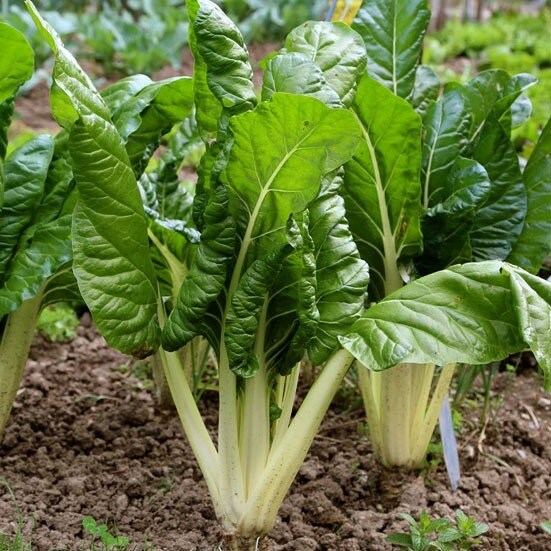
plante alimentaire
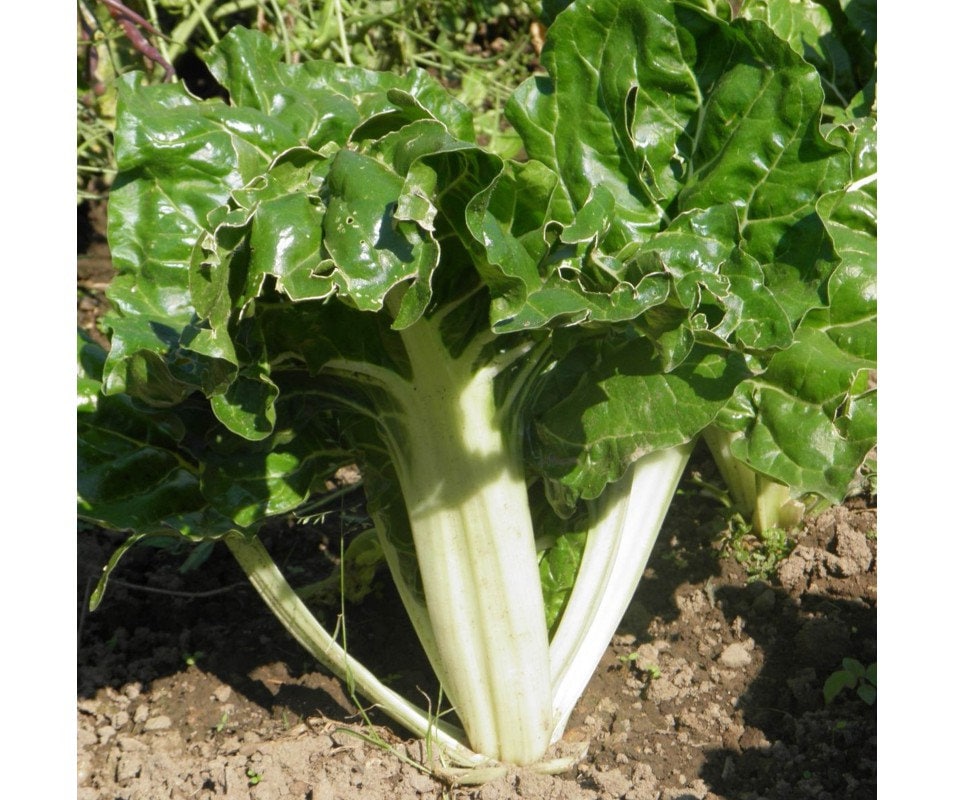
White chard (Swiss beet) seed
$3.64
-
DetailsWhite chard seed (Beta vulgaris cicla) 3 grams approx. 125 glomerules
The stalks are delicious cooked in butter, cream, meat juices, or in a gratin. The leaves are used in soups or like spinach.
This vegetable, very easy to grow, is known by many different names: chard, Swiss chard, silverbeet, and cardoon. Chard is one of the vegetables richest in fiber, making it very effective in combating constipation. Its leaves are an excellent source of vitamin C (35 mg per 100 g) with well-known antioxidant properties.
Climate: Temperate.
Exposure: Sunny.
Soil: Deep and cool.
Sowing: In place, from April to the end of May. Sow in pockets of 3-4 seeds.
Spacing: 40 cm on the line, 40 cm apart in the line.
Harvest: 2 to 2.5 months after sowing.
Good companion plants: Chard thrives when planted near carrots, kohlrabi, radishes, turnips, and bush beans. However, it should not be planted near leeks.
Fertilization: Swiss chard will appreciate having its soil prepared in the fall with a vegetable fertilizer and compost. However, fresh manure should be avoided. During the growing season, an application of seaweed-based fertilizer (Bioalgua) provides an excellent boost.
Care: Keep the soil moist until germination, which usually occurs after 10 to 12 days. Once the plants have a few leaves, thin them out to the strongest plant per planting hole. Regular hoeing and weeding are essential during cultivation. Water frequently. Swiss chard is susceptible to drought, so mulching is recommended during periods of intense heat.
Diseases and parasites: Although some diseases affect chard, they do not necessarily require curative treatment.
Downy mildew, which covers chard leaves with a grey powder, can be prevented by spraying with Bordeaux mixture. A curative treatment can be considered as soon as symptoms appear.
Cercospora leaf spot and rust cause the foliage of Swiss chard to wither after developing small yellow or rust-colored spots. These diseases can be treated like downy mildew.
Young plants, sometimes attacked by black aphids, can be treated at dusk with sprays of Pyrethrum-based Anti-Aphid insecticide.
When defoliating cutworms attack chard leaves, it is then a good idea to treat with a biological insecticide derived from Bacillus Thurengiensis.
Crop rotation: It is advisable to wait 3 to 4 years before planting chard in the same place again.
Open-pollinated seeds harvested exclusively from the Pot'à'Jo garden, a 1500m² market garden combining horticulture and permaculture. Everything is cultivated there with deep respect for nature and its inhabitants. I have been cultivating my own seeds, from seed to seed, for years. -
Shipping & Policies
Shipping from France
Processing time
1-3 business days
Customs and import taxes
Buyers are responsible for any customs and import taxes that may apply. I'm not responsible for delays due to customs.
Payment Options
Returns & Exchanges
I gladly accept returns and exchanges
Just contact me within: 14 days of delivery
Ship items back to me within: 30 days of delivery
I don't accept cancellations
But please contact me if you have any problems with your order.
The following items can't be returned or exchanged
Because of the nature of these items, unless they arrive damaged or defective, I can't accept returns for:
- Custom or personalized orders
- Perishable products (like food or flowers)
- Digital downloads
- Intimate items (for health/hygiene reasons)
Conditions of return
Buyers are responsible for return shipping costs. If the item is not returned in its original condition, the buyer is responsible for any loss in value.
Related Products