Courge
Butternut Pumpkin Seed
$3.64
-
DetailsButternut Squash Seeds (Cucurbita moschata) 10 seeds
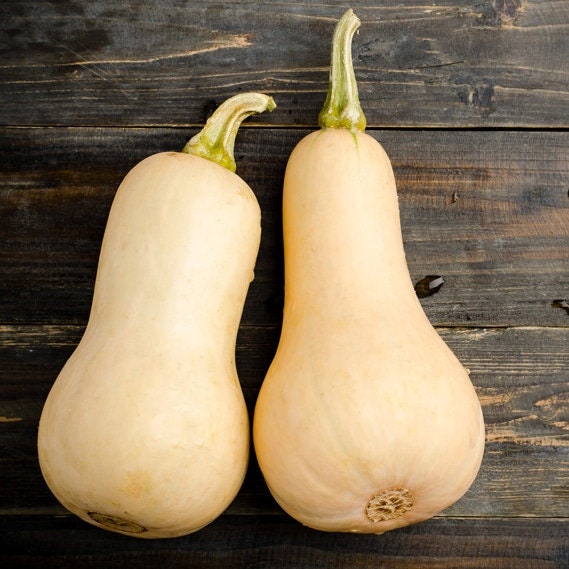
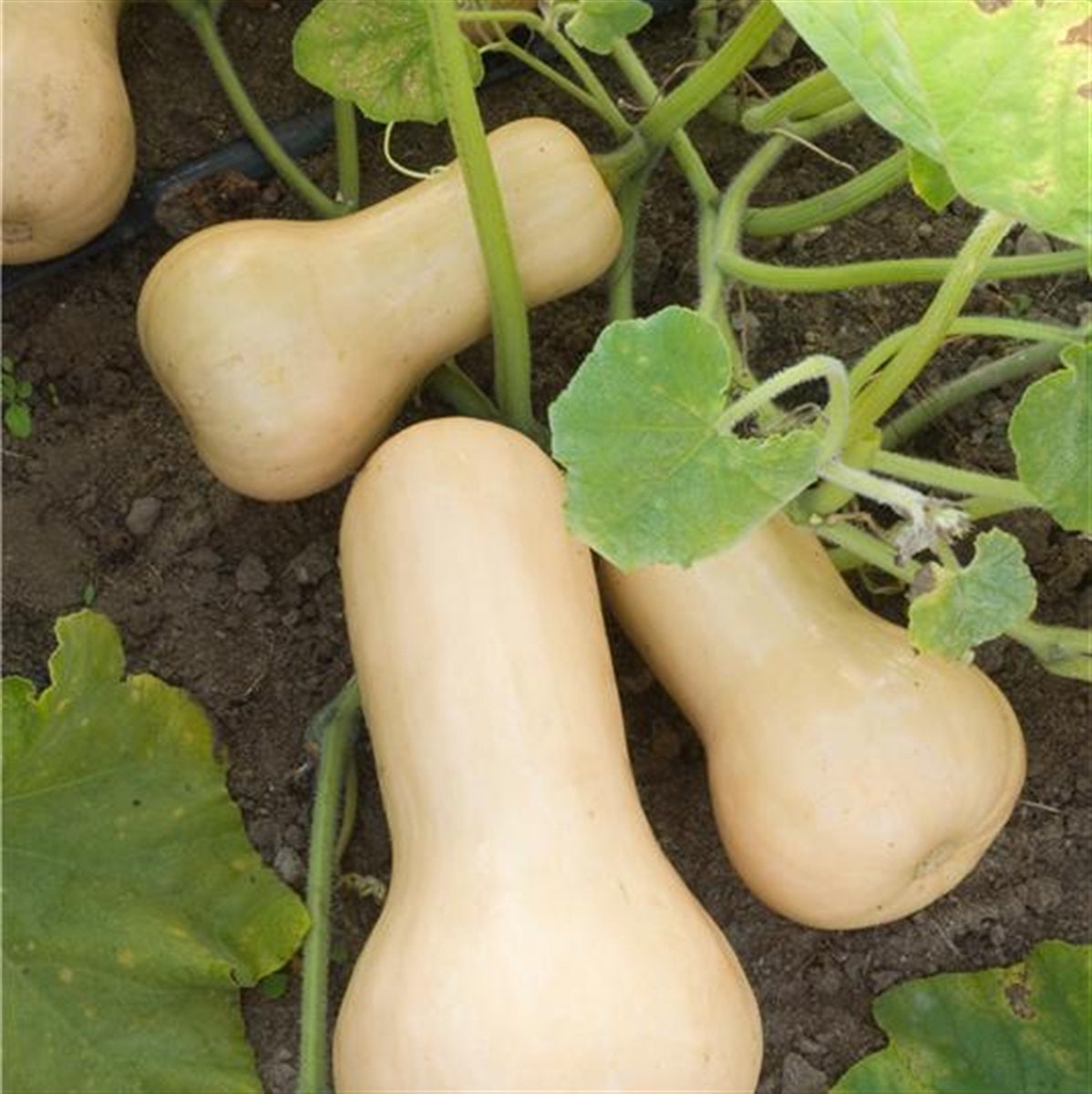
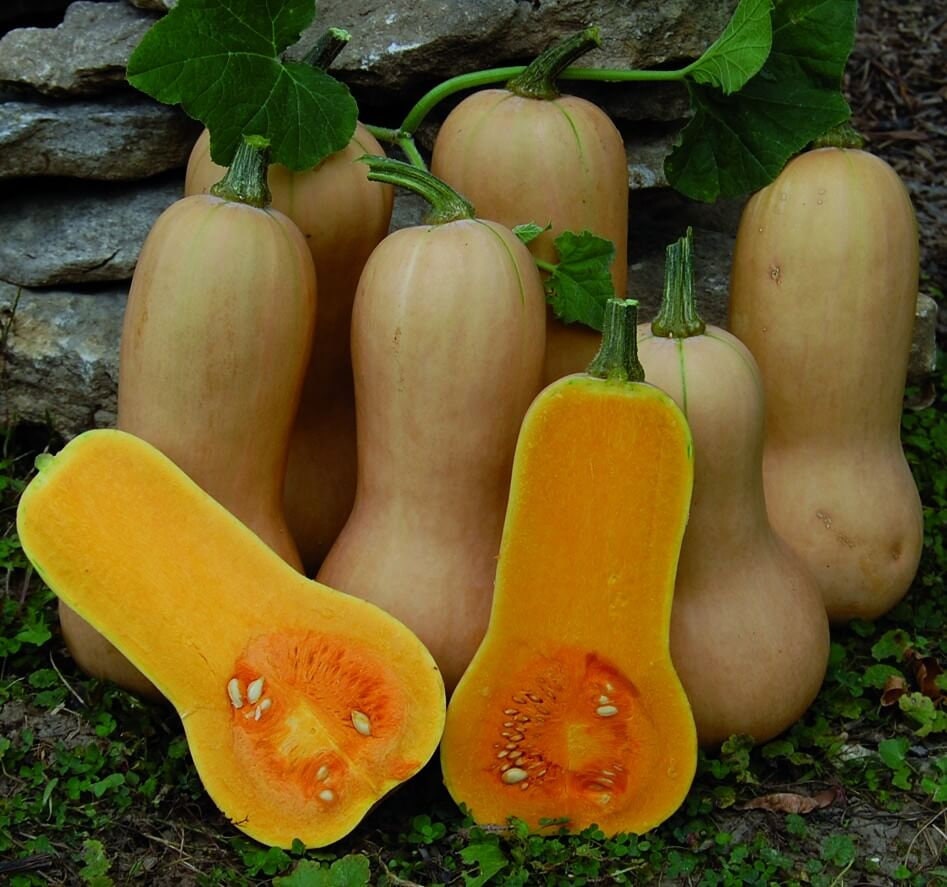
The Butternut squash, also called Butternut or Butternut pumpkin, is a late-maturing, vining variety. It produces 4 to 7 fruits per plant, with a cylindrical section measuring 8 to 12 cm in diameter and a bulbous section measuring 10 to 14 cm, reaching 15 to 25 cm in height. The weight varies between 1.5 and 3 kg.
The flesh of the butternut squash is yellow to orange-yellow, fine-textured, buttery, and melts in your mouth like an avocado. Its delicious musky flavor is perfect for making creamy soups, gratins, soufflés, fries, purées, tarts, jams, and even eaten raw grated.
Sowing: In April, sow in small pots in a bright location (minimum temperature 12°C; the seeds need warmth to germinate), placing the seeds on their sides. Be careful with watering; keep the soil moist with a spray bottle, but avoid overwatering to prevent the seeds from rotting. Place your pots near a light source.
Transplant to a sunny location in mid-May, spacing non-vining varieties 1 m apart in all directions and vining varieties 1.20 m apart within the row and 2 m between rows. Water regularly. Adding compost is recommended.
Pinch the stems to stimulate growth.
Hoe and weed. Mulch around the base to limit weed growth and retain moisture. Water at the base in summer, avoiding wetting the foliage.
Avoid planting it near potatoes. However, it will appreciate being near beans and cabbage.
The harvest generally takes place between September and November.
One of the best ways to know when to harvest your squash is to observe the stem, which becomes corky when the fruit is ripe. Be careful never to pick up squash by this stem, as this will cause invisible damage that inevitably leads to rot. The fruits should be cut as close to the stem as possible, left to dry in the sun for a day, then brought indoors to a warm, dry, and well-ventilated place, without bumping them, at a temperature between 12 and 20°C (54 and 68°F). For small quantities, the top of a cupboard or wardrobe is ideal.
Open-pollinated seeds harvested exclusively from the Pot'à'Jo garden, a 1500m² market garden combining horticulture and permaculture. Everything is cultivated there with deep respect for nature and its inhabitants. I have been cultivating my own seeds, from seed to seed, for years. -
Shipping & Policies
Shipping from France
Processing time
1-3 business days
Customs and import taxes
Buyers are responsible for any customs and import taxes that may apply. I'm not responsible for delays due to customs.
Payment Options
Returns & Exchanges
I gladly accept returns and exchanges
Just contact me within: 14 days of delivery
Ship items back to me within: 30 days of delivery
I don't accept cancellations
But please contact me if you have any problems with your order.
The following items can't be returned or exchanged
Because of the nature of these items, unless they arrive damaged or defective, I can't accept returns for:
- Custom or personalized orders
- Perishable products (like food or flowers)
- Digital downloads
- Intimate items (for health/hygiene reasons)
Conditions of return
Buyers are responsible for return shipping costs. If the item is not returned in its original condition, the buyer is responsible for any loss in value.
Related Products